
Snow Removal

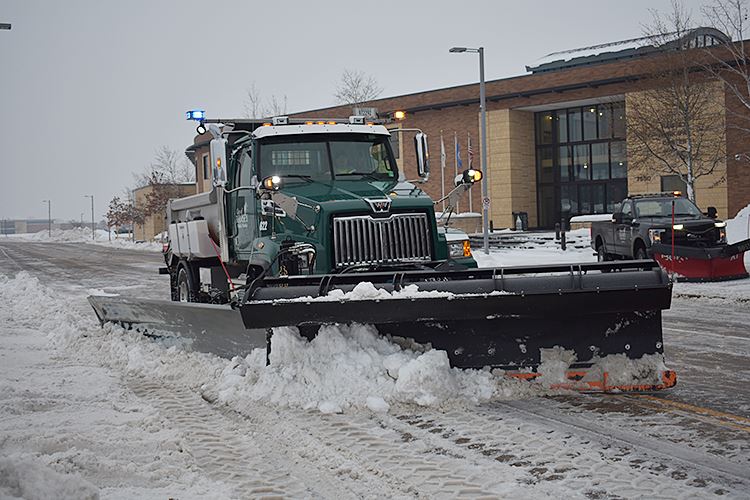
Citywide snowplowing starts once snow accumulates to two inches or more. Crews focus on plowing main routes and connections to state and county roads during prolonged snowfall. If winds create unsafe conditions, plowing will pause until conditions improve.

Snowplow drivers clear roads first, followed by sidewalks and trails, which are typically cleared starting the day after a storm. Sidewalks and trails are only cleared on weekdays and non-holidays. If a storm occurs on a weekend, clearing will happen on Monday, depending on conditions.

During an average snowfall event, crews cover over 300 miles, plowing and applying chemicals to the streets.

Snowplow Information Line

You can call the Snowplow Information Line at 763-433-9852 for a schedule of snowplowing activities.

Stay informed of the weather forecast. Just a reminder: No parking on City Streets is in effect from 2:00 to 6:00 a.m. Not parking on a city street could save you a tow bill and assist our snowplow team.

In most circumstances, city crews use straight salt on icy areas. We will switch to a salt/sand mixture during extreme cold weather. This does not guarantee ice-free streets, so drive carefully even where salting or sanding is evident. Priority areas receive treatment, and all other areas are done when time permits. Priority areas include:

  • All collector street stop sign intersections
  • All other stop signs
  • Areas deemed hazardous by city crews or other city officials
  • Bridge decks
  • Intersections of city streets and county and state roads
  • Streets with hills and curves

We use salt, sand, and chemical brine to ensure road safety during winter. Green street signs indicate City streets. Sand provides temporary traction but doesn’t melt ice; it’s primarily an abrasive material. Typically, Ramsey mixes about 15% salt with 85% sand, reserving this for extremely cold weather or freezing rain. 

Pure salt is applied to primary roads and intersections for ice control, effective between 15 and 20 degrees Fahrenheit. As temperatures decrease, more salt is required to melt ice. 

Ramsey has adopted a pre-wetting process for salt, using a liquid tank on sanding trucks to create brine, which enhances melting and reduces spillage. This process saves 20-30% of salt. 

With over 190 miles of roadway and around 860 intersections, the City relies on both the Police and citizens to report winter-related issues, as snow compaction and salt displacement can create slippery spots before maintenance crews can address them.
Visit the Public Works Facility at 14199 Jasper Street NW after October 31 and before the first snowfall to find wooden stakes in a blue barrel outside the front door. Each household may take up to six stakes, spaced 20 to 30 feet apart, to help plow drivers identify the road’s edge. Drive stakes about 6 inches deep to avoid utility lines. The stakes will break off after a few plowing operations, but will help mark the curb line.

Note that the Boulevard Staking Policy prohibits metal posts and other non-breakaway materials in the public right-of-way due to safety risks, and they will be removed by Public Works. Small fiberglass and aluminum poles with reflectors are acceptable.

After a snowfall, it's important not to push driveway snow and ice into the street, as this is prohibited by Minnesota Statute 160.2715 (a)(1). Doing so creates hazards for drivers and pedestrians and causes delays for plow drivers, ultimately increasing taxpayer costs. Ramsey Police will respond to complaints or violations, which may result in a misdemeanor citation. Let's work together to keep our streets safe for everyone.

Parking is not allowed on any public street year-round between 2:00 a.m. and 6:00 a.m. During a snow event with two inches or more of snowfall, parking is permitted after 6:00 a.m. until 2:00 a.m. once the street has been cleared curb to curb.

Vehicles parked in violation of these rules may be issued citations and flagged for towing by patrolling police. Furthermore, after two inches of snow accumulation, vehicles parked in locations that pose a significant hazard can be towed immediately by police or at the request of state, county, or city maintenance personnel.

Please stay informed about the weather forecast. In the event of snow, we encourage you to move your vehicle off city streets whenever possible to assist our snowplowing team.

Property damage can occur during snowplow operations. The City is not liable for damages to private property in the public right-of-way (ROW), such as fences, landscaping, or sprinkler systems. Property owners should remove these obstacles from the ROW. If removing the items is not possible, marking them may help, but there are no guarantees. 

Mailboxes will only be repaired if the plow makes direct contact. Ensure your mailbox post is sturdy.

If your mailbox or turf is damaged, report it to Marsha Weidner at 763-433-9839. Turf damage is typically repaired each spring. The City offers free wooden laths to help mark the pavement edge for snowplow drivers, especially at corners where visibility is challenging.

Please keep garbage cans and recycling containers off the street. Placing them in the driveway or behind the curb allows snowplow drivers to plow curb-to-curb and reduces the risk of containers tipping over. Basketball hoops should be removed from cul-de-sacs for the winter.  

Where to Place the Mailbox

Here are some helpful guidelines to follow when placing your mailbox:

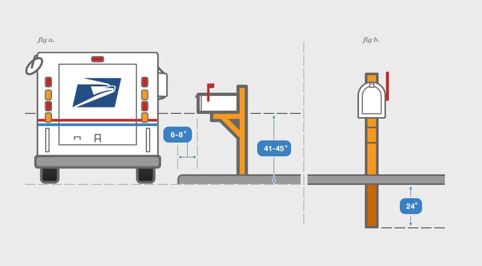
  • Position your mailbox 41" to 45" from the road surface to the bottom of the mailbox or point of mail entry.
  • Place your mailbox 6" to 8" back from the curb. If you do not have a raised curb, contact your local postmaster for guidance.
  • Put your house or apartment number on the mailbox.
  • If your mailbox is on a different street from your house or apartment, put your full street address on the box.
This diagram shows measurements of proper mailbox height and depth from the curb

Installing the Mailbox Post

The best mailbox supports are stable, but they bend or break when a car hits them. The Federal Highway Administration recommends:

  • A 4" x 4" wooden support or a 2"-diameter standard steel or aluminum pipe.
  • Avoid unyielding, potentially dangerous supports, such as heavy metal pipes, concrete posts, and farm equipment (for example, milk cans filled with concrete).
  • Bury your post no more than 24" deep.

Source: United States Postal Service, https://www.usps.com/manage/mailboxes.htm

Marsha Weidner
Public Works Administrative Assistant
Email Marsha
763-433-9839

Shane Turner
Streets Supervisor
Email Shane
763-433-9884

Sign up to our Newsletter

Stay up to date on the city's activities, events, programs and operations by subscribing to our eNewsletters.