Emerald Ash Borer Management Plan City of Ramsey, MN
Purpose:
By implementing the provisions of the Emerald Ash Borer Management Plan, the City is attempting to minimize the disruption to its urban forest due to the inevitable infestation of Emerald Ash Borer (EAB). Based on the current evidence from states such as Michigan and Ohio, a proactive approach should help spread the costs associated with an EAB outbreak over a manageable time period and limit the detrimental effect on property value, quality of life and the environment.
Applicability:
This management plan is applicable to all public properties within the City, including rights-of-way, boulevards, parks, and open spaces, as well as private properties.
Administration:
The Community Development Department shall be responsible for implementing this program and working with the Public Works Department to see that the provisions are carried out.
Introduction:
Emerald Ash Borer (EAB) is an introduced invasive insect that has now been confirmed in twenty (20) states, including Minnesota, and two (2) Canadian provinces. EAB attacks all species of ash trees (Fraxinus Spp.) found in Minnesota, which include green ash (Fraxinus Pennsylvanica), white ash (Fraxinus Americana) and black ash (Fraxinus Nigra). This is of great concern because Minnesota is home to more than 900 million ash trees statewide, and unlike some similar borers in the Agrilus genus (such as two-lined chestnut borer and bronze birch borer), EAB is not solely an opportunistic pest, it is known to attack both healthy and stressed ash trees alike.
As of the adoption date of this management plan, EAB has been confirmed in four (4) Minnesota counties: Hennepin, Ramsey, Houston and Winona. While it is impossible to accurately determine when this pest will arrive in Ramsey, it is no longer a question of ‘if’ but ‘when’ it will be found here. It is possible that this pest has moved beyond the known infestation sites and has yet to be identified.
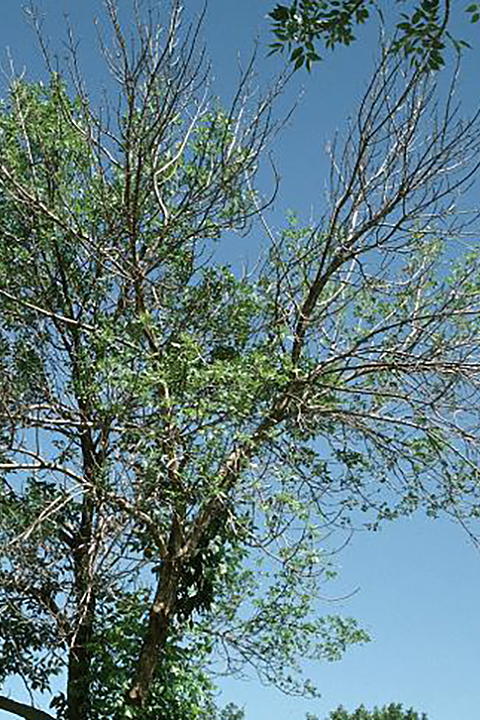
It is not the adult beetles that are detrimental to ash trees but rather the larvae of EAB (immature stage), which feed on the inner bark of trees, disrupting a tree’s ability to transport water and nutrients up to the canopy. As the number of larvae in a tree increases, less and less water and nutrients reach the canopy, resulting in dieback in the upper portions of a tree. By the time visible symptoms are obvious, the population of EAB has grown and likely spread to other trees in the area.
Signs/symptoms of EAB that can help detect an infestation include:
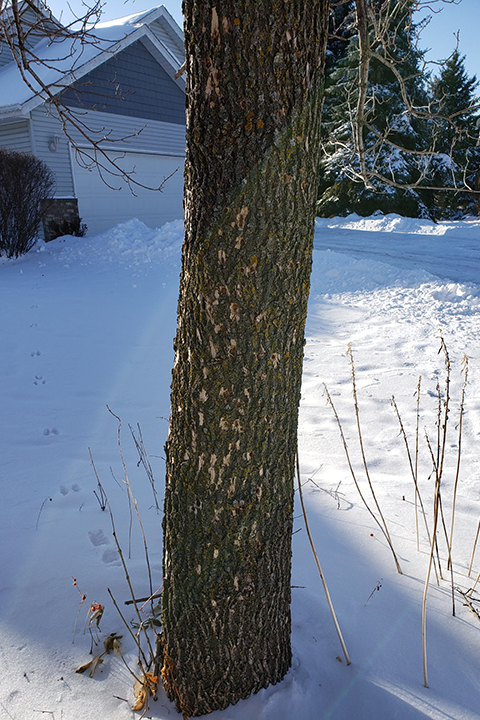
- Increased woodpecker activity/damage
- Bark splitting (vertical slits)
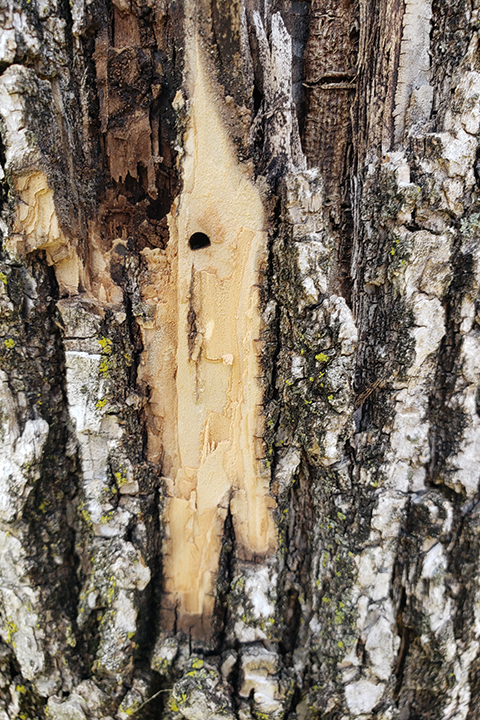
- D-shaped exit holes created by adult insects as they emerge from the tree
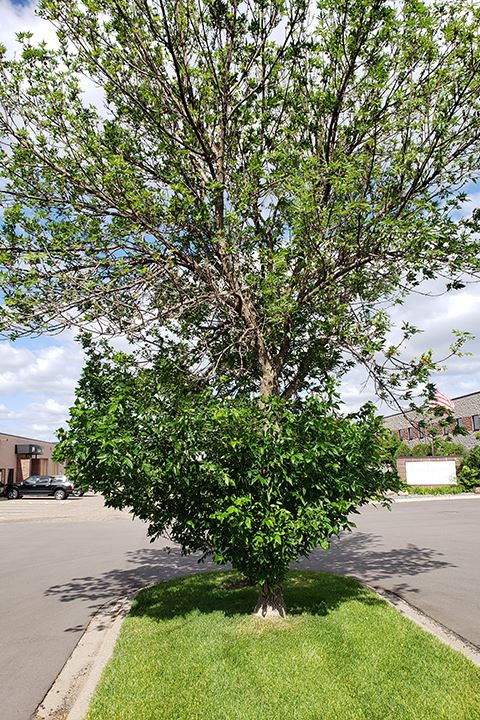
- Epicormic branching/shoots near the base of the tree
- Canopy dieback
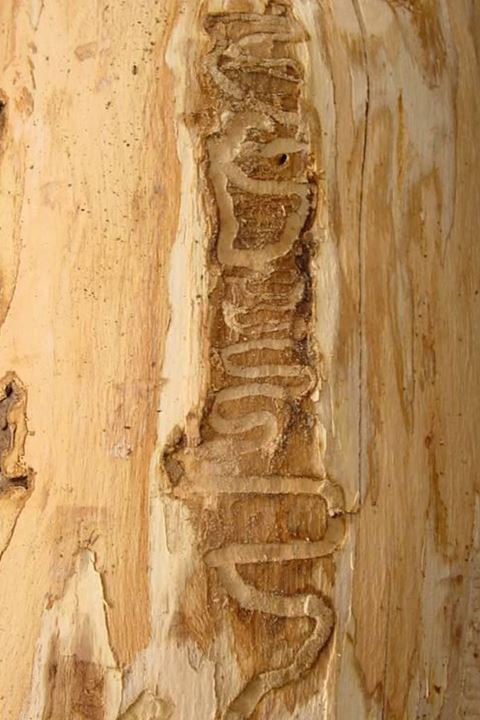
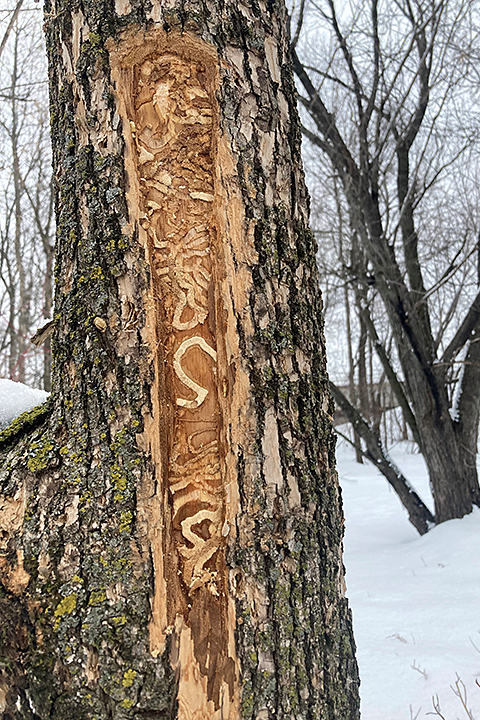
- Serpentine (s-shaped) larval galleries that are packed with frass
Making early detection even more difficult is that initial attacks on an ash tree tend to be in the upper canopy. For this reason, increased woodpecker activity is becoming a more reliable early indicator of a possible infestation.
The City does not have an inventory of existing boulevards and/or park trees, and therefore, it is unclear what the true impacts of EAB will be upon public land within the community. Nonetheless, the City will implement the following steps to try and slow the spread of EAB and allocate the costs of managing the tree loss and replacement over multiple budget cycles.
Ash Management Plan:
- Complete an inventory of all boulevard trees and trees in maintained park areas.At a minimum, an inventory of all ash trees in boulevard areas and maintained park areas should be completed. However, since the City has no inventory data at all, a complete inventory of trees would be beneficial for a number of reasons including:
- Determining the percentage of boulevard trees that consist of ash species will help clarify the impact EAB will have on Ramsey’s street tree program as well as the urban forest as a whole.
- Better budget estimation for maintenance (trimming, removing, planting)
- Developing a master street tree plan to ensure a species-rich landscape (diversity is the best defense against insect/disease outbreaks)
- Replanting efforts
- Education. The City will continue to educate the citizenry and elected officials concerning EAB. Tools that can and will be utilized include newsletter articles, segments on QCTV, the website and presentations to various groups/organizations. Education will emphasize the importance of monitoring and early detection as well as management strategies including removal and disposal of infested wood and appropriate times of year to complete such work to avoid inadvertently spreading EAB.
- Boulevard Trees:
- The City will institute a new policy that prohibits the inclusion of planting any ash species (Fraxinus spp.) on public property and boulevards.
- The City will discourage the inclusion of planting any ash species (Fraxinus spp.) as a part of any proposed development, whether commercial, residential or industrial.
- Existing ash trees in poor condition or in fair condition with major defects will be targeted for removal.
- Once discovered, EAB-infested ash trees will be removed and disposed of properly.
- Ash trees that are removed will be replaced with another species, budget permitting. Replanting will be done with a keen focus on species diversity and matching the right tree with the right location.
- Plantings will be conducted in the spring and/or fall based on staff availability and budget.
- Pesticide control will only be considered for ‘Legacy’ trees, those that have significant historical meaning or those that are rated in excellent condition. This option will not be implemented for other ash trees because while it may be less costly than removal and replanting in the short term, it can be much more expensive in the long term due to the need to re-treat annually or biannually with the currently available products. Additionally, considering the general age (fairly young) and size (relatively small) of Ramsey’s street trees, removal and replacement likely would be more cost-effective presently.
Park Trees:
- The number of ash trees in City Parks, including maintained and wooded areas, is unknown but is likely well beyond a thousand. Ash trees in poor condition or fair condition with major defects in maintained portions of parks will be identified and targeted for removal.
- The City will continue to work with the MN Department of Agriculture (MDA) and the MN Department of Natural Resources (DNR) to establish detection trees and traps in City parks as needed for early detection of EAB.
- Ash trees in wooded areas will not be addressed unless in close proximity to a trail or structure where harm and/or damage could result from a failure. However, if an ash tree in a wooded area is found to be infested and it is in the early stages of infestation, said tree(s) may be removed to slow the spread to other areas.
- Ash trees removed from maintained areas of parks will be replaced budget permitting, again with a focus on species diversity and matching the right tree with the right location.
- Should ash trees be removed from wooded areas, natural regeneration will be relied upon for reforestation.
Trees on Private Property:
- Through educational efforts, property owners will be encouraged to diligently monitor their ash trees for any signs of EAB. They can either contact the City’s Community Development Department or the MDA Arrest the Pest hotline for more information or for a site inspection.
- For property owners who are contemplating treatment options for individual ash trees, the City encourages them to hold off until EAB has been confirmed within fifteen (15) miles of Ramsey, as recommended by the MDA.
- The City will also continue to encourage property owners to replace lost trees with species appropriate for the site or even in advance of potential infestation and ash removal. As with public lands, the City encourages property owners to diversify the species on their property to buffer against future insect/disease outbreaks. A valuable reference that is available to homeowners for planting suggestions is the Ramsey Tree Book, which is available through the City’s website.
Summary:
It is clear that EAB poses a serious threat to Ramsey’s community forest. The City will implement this EAB Management Plan to the extent feasible and as budgets permit. The steps outlined above are based on current knowledge of EAB. This management plan is subject to revision(s) as new information about EAB becomes available and/or as new treatment options are identified. Furthermore, this plan is also subject to revision should state and/or federal policies necessitate plan updates. Revisions to the EAB Management Plan would be subject to City Council approval.
Projected Budget/Cost to City
- Tree removal and disposal cost estimate of $250 per tree*:
- bobcat & operator (1.5 hrs) $150.00
- 1-ton truck with maintenance worker (1 hr) $100.00
- Stump removal cost estimate of $200 per tree*:
- bobcat & operator (1.5 hrs) $150.00
- 1-ton truck with maintenance worker (.5 hrs) $50.00
- $400 per replacement tree (materials and labor)
* This estimate includes time for loading and unloading equipment, travel time, soil and seed for restoration of the site and equipment maintenance.