
Tree Diseases and Pests
Anthracnose
Causes & Symptoms
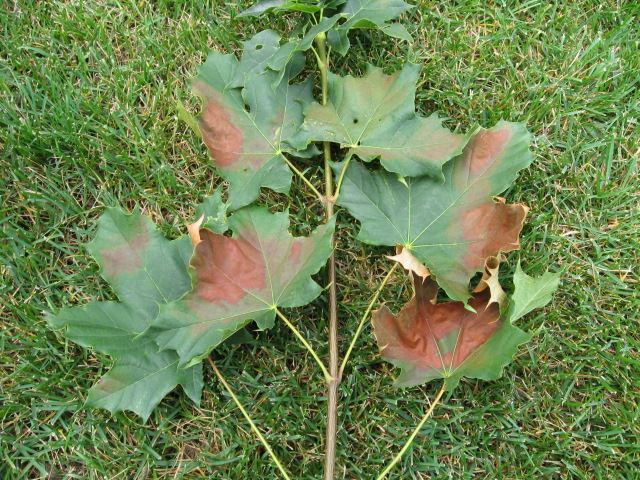
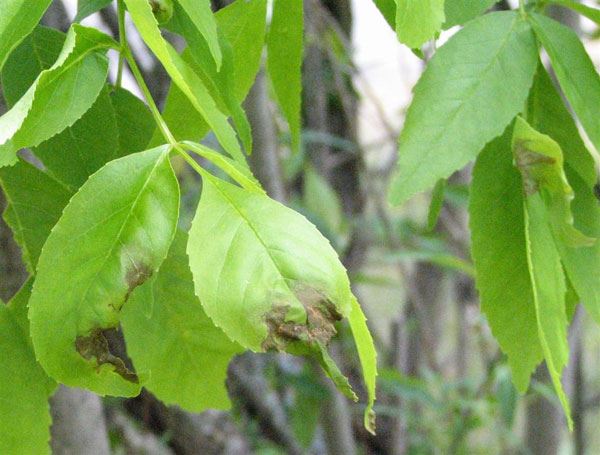
Anthracnose is a fungal disease that can affect multiple tree species, most notably Maple, Oak, and Ash. This fungus thrives on cool, wet spring weather. If these conditions occur, it is fairly common to see oak, maple, and ash trees showing symptoms such as brown spots on leaves, leaf curling or distortion, and leaf drop.
Anthracnose is typically prevalent in the lower inner branches, where humidity levels are generally higher. On oak trees, this characteristic helps differentiate Anthracnose symptoms from those of Oak Wilt, a much more severe, systemic fungal disease. These symptoms typically show up in late spring or early summer and can cause a tree to defoliate, which creates a bit of concern for tree owners. However, the leaves typically drop early enough in the season that a healthy tree will 'push out' a second flush of growth.
Treatment
Anthracnose is generally not considered a threat to the life of a healthy, vigorously growing tree. However, stressed trees are more susceptible to other factors, such as drought, insects, root problems, and repeated, severe defoliation over several consecutive growing seasons. Anthracnose treatment applications are generally not needed for healthy, vigorously growing trees.
Cultural practices that should be implemented include proper tree watering, mulching (to help retain moisture in the soil), raking up the leaves in the fall, and properly disposing of them (don't just blow them into the woods, mulch them with a lawn mower, or keep them for composting because the fungal spores overwinter on the leaves, and if left on-site, it can increase the chances for re-infection the following year).

European Sawfly Larvae
Common Problems with Spruce Trees
There are a couple of relatively common fungal diseases that affect spruce trees, especially Colorado Blue Spruce, which, when planted here, is outside of its native range.
Rhizosphaera
Probably the most common problem affecting spruce trees is a fungal disease known as Rhizosphaera Needle Cast. This disease can affect most spruce species, but is especially problematic on Colorado Blue Spruce.
Symptoms
Symptoms of Rhizosphaera Needle Cast typically appear in late winter or early spring, with needles turning brown or purplish-brown. Around mid-summer, infected needles begin to drop from the tree.
Generally, the tips of the branches remain green and unaffected. With the aid of a hand lens, tiny black dots can often be seen on the infected needles (these are the fungus's fruiting structures). The symptoms typically begin on the lower, inner portions of branches, where humidity levels normally are higher. The fungal spores are moved around by splashing water (either from raindrops or irrigation).
Management Options
Trees that are stressed from drought, insects or other factors are more susceptible to Rhizosphaera Needle Cast. While this fungus will not usually kill a tree, severe infestations can leave a tree thin and unattractive. Management options that can be implemented include cultural practices such as watering during periods of drought (do not let the water splash down on the needles), mulching around the base of the tree (don’t pile mulch against the trunk of the tree) and providing ample space between trees to ensure good airflow. A fungicide could also be applied in the spring to protect needles. Two applications would be necessary. Make sure to follow label directions if utilizing a fungicide.

Photo credit: MN Department of Natural Resources archive, bugwood.org
Cytospora
Cytospora Canker is another fungal disease that affects multiple spruce species but is most common on Colorado Blue Spruce trees that are at least 10 years old. This is another opportunistic pathogen, meaning it is more problematic for trees that are stressed by drought, insects or other factors.
Symptoms
Symptoms are somewhat similar to Rhizosphaera Needle Cast, typically beginning in the lower branches of a tree. A sunken canker forms on an infected branch and will eventually girdle and kill that branch, causing the needles to turn brown and drop off. The cankers are often covered with a white or bluish-white resin, a characteristic symptom of Cytospora Canker. The fungus typically will not enter the trunk of the tree and thus will rarely kill an entire tree, but will leave it thin and unattractive. The spores of this fungus can be transported by wind or splashing water (both rain and irrigation).
Management Options
Management options that can be implemented include cultural practices such as watering during periods of drought (do not let the water splash down on the needles), mulching around the base of the tree (don’t pile mulch against the trunk of the tree) and planting either Norway or White Spruce, both of which are less susceptible than Colorado Blue Spruce. Infected branches can also be pruned and destroyed during dry weather.

Photo credit MN Department of Natural Resources archive, bugwood.org
Other Resources
Related Documents
Sign up to our Newsletter
Stay up to date on the city's activities, events, programs and operations by subscribing to our eNewsletters.