Invasive Herbaceous Plants
Canada Thistle (Cirsium Arvense)
Canada thistle is a widely distributed perennial plant that can grow up to five feet tall. Its leaves have sharp spines along the edges. Canada thistle grows in various habitats with full or partial sun and is often found in disturbed areas such as roadsides, trails, pastures, and recently flooded areas.
Canada Thistle impacts:
- Once Canada thistle has been established, it spreads quickly, replacing native plants and decreasing diversity.
- Canada thistle can reduce the amount of desirable forage available to grazing animals in pastures.
- Canada thistle multiplies in disturbed areas, making it a challenge in landscape restoration projects.

Photo credit whiteknightsbiodiversity
Creeping Charlie (Glechoma Hederacea)
A short, horizontally growing plant with square stems, round-toothed leaves, and small purple flowers. When crushed, it has a faint mint smell.
Creeping Charlie impacts:
- This plant is not considered a threat to healthy plant communities but can take over disturbed areas.
- This plant is considered weedy in urban gardens and turf lawns.

Photo Credit Charles T. Bryson
Crown Vetch (Coronilla Varia)
Crown vetch is a perennial herbaceous plant. Its stems trail over other plants and can grow 2-6 feet long. Crown vetch plants are brown in winter and early spring and can be visible as brown patches on the landscape.
Crown Vetch impacts:
- Crown vetch can cover other plants, spread vegetatively, and cover acres of land. Outcompeting other plants reduces species diversity and habitat.
- Crown vetch is challenging to manage. Its impacts have been mainly an issue in prairies and dunes.
- As a legume, crown vetch can change soil nitrogen levels, making it difficult for native plants to compete.
- While crown vetch was planted to control erosion, it may not stabilize slopes as intended.
- Crown vetch contains chemicals that make it non-palatable to grazing animals.

Photo credit MN Department of Natural Resources
Garlic Mustard (Alliaria Petiolata)
Garlic mustard has two different appearances depending on whether it is one or two years old. First-year plants are low-growing, circular rosettes of kidney-shaped leaves with scalloped edges. In its second year, the plant shoots up a 12-36 inch stem that will develop small white flowers at the top. If crushed, the plant smells like garlic.
Garlic Mustard impacts:
- Creates thick mats that shade and outcompete native plant species.
- It can impede natural forest regeneration by producing chemicals that reduce the growth of other plants.

Photo credit tallgrassrestoration.com
Leafy Spurge (Euphorbia Esula)
Leafy spurge is an herbaceous plant that grows two to four feet tall and has flowers that are a distinct yellow/green color. When broken, the plant's stems, flowers, and leaves emit a white milky sap.
Leafy spurge impacts:
- Leafy spurge is toxic to cattle and horses.
- Leafy spurge dramatically reduces the productivity and biodiversity of pasture and prairie lands.

Photo credit MN Dept. of Agriculture
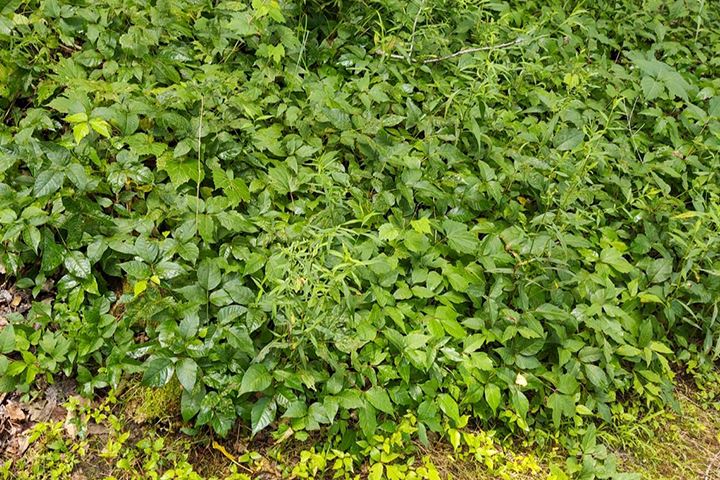
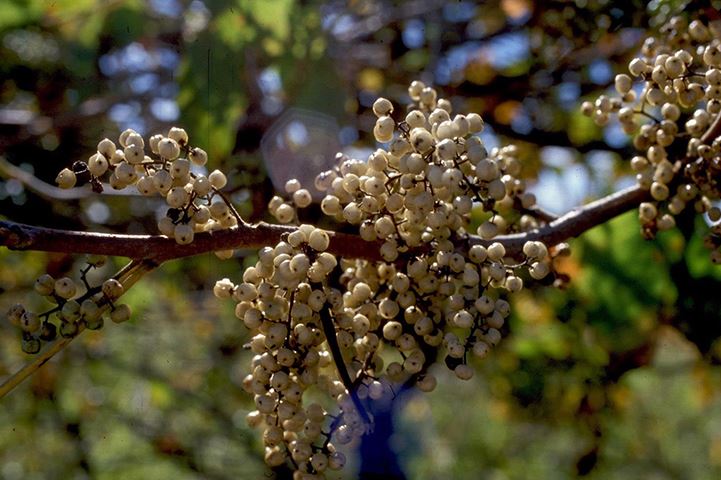
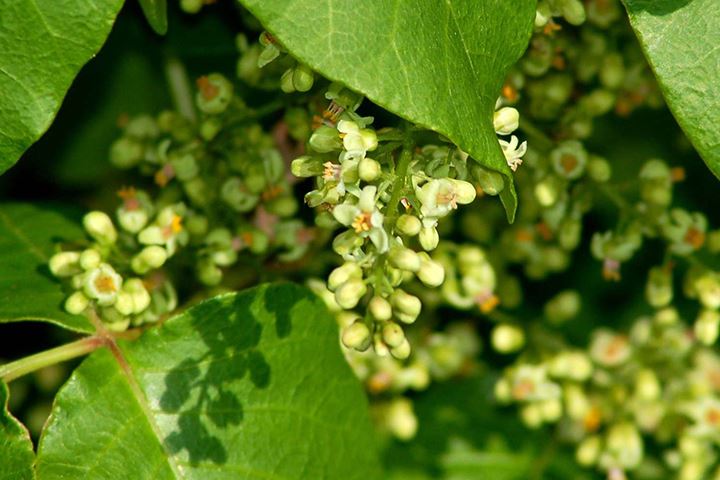
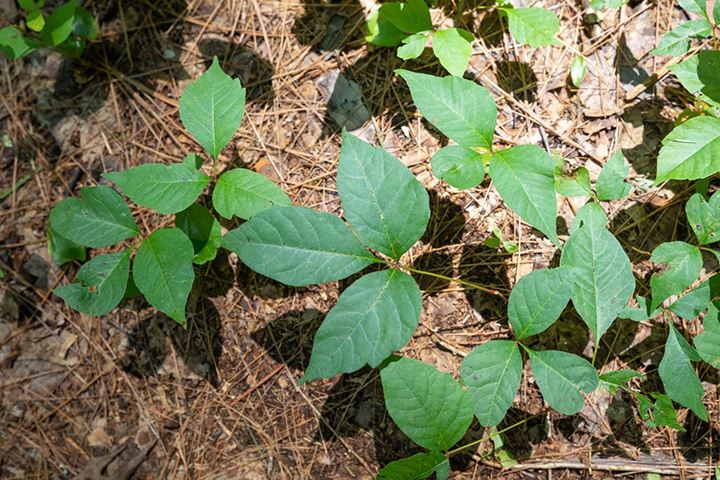
Poison Ivy (Toxicodendron rydbergii)
Western poison ivy is a smallish, non-climbing shrub, usually about knee-high, with a single stem and only a few stubby branches or no branches at all.
Poison Ivy impacts:
Western poison ivy often forms colonies, sometimes 20 ft (6 m) or more across. They grow quickly and can spread aggressively, especially in damaged habitats. This is certainly the case on roadsides, ditch banks, utility rights-of-way, and old fields. It is also notoriously adept at encroaching into mowed lawns from adjacent woods.
Reed Canary Grass (Phalaris Arundinacea)
Reed canary grass is a coarse, cool-season grass that grows from 2 to 6 feet tall. Reed canary grass is one of the first grasses to sprout in the spring.
Reed Canary Grass impacts:
- Reed canary grass forms large, single-species stands and deposits thick thatch that suppresses other plants.
- It can outcompete most native species in natural wetlands and presents a significant challenge for restoration in wetland mitigation efforts.
- Dense reed canary grass infestations reduce plant and insect biodiversity.

Photo credit mortonarb.org
Spotted Knapweed (Centaurea Maculosa)
Spotted knapweed is a biennial or short-lived perennial herbaceous plant growing 2-3 feet tall. Basal leaves form a rosette the first year, growing one to twenty wiry, branched stems during the second year.
Spotted Knapweed impacts:
- Spotted knapweed is poisonous to other plants (phytotoxic) and forms dense monocultures.
- It threatens dry prairie, oak and pine barrens, dunes, and sandy ridges.
- It spreads rapidly along road corridors, gravel pits, agricultural field edges, and overgrazed pastures.
- Spotted knapweed reduces forage quality in pastures for livestock.

Photo credit MN Dept. of Agriculture
Wild Parsnip (Pastinaca sativa)
Wild parsnip spends one or more years as a clump of low-lying leaves with no vertical stem. The following year, it grows up a flowering stalk, blooms, and then dies. It is 6 inches tall in the rosette stage and 4 feet tall in the flowering stage, with yellow flowers.
Wild Parsnip impacts:
- Wild parsnip readily moves into disturbed habitats and is often found along roadsides, forest edges, and trails. It invades slowly, but once the population grows, it spreads rapidly and can severely modify open dry, moist, and wet-moist habitats. Wild parsnip has also been found to invade native prairies.
- When the sap of wild parsnip contacts skin in sunlight, it can cause chemical burns that resemble a rash, with blistering and discoloration of the skin (phytophotodermatitis).

Photo credit Leslie J. Mehrhoff
Sign up to our Newsletter
Stay up to date on the city's activities, events, programs and operations by subscribing to our eNewsletters.